Use Local Keywords on Your Website to Get Found Nearby
Local SEO, Website Optimization, Service Location
How Local Businesses Can Improve Search Engine Visibility with Natural Location-Based Content
If you run a local business, your website should work as hard as you do to attract local customers. Strong Local SEO is not about tricks or awkward keyword stuffing. It is about clearly telling search engines – and people – who you are, what you do, and where you do it. In this guide, Connextion walks you through practical, human-friendly ways to improve search engine visibility by weaving your service and location naturally into your website content.
Why Local SEO Starts with Clear Service and Location Information
When someone searches for “nearby services” such as “plumber near me” or “tax accountant in Springfield,” search engines look for websites that clearly mention both the service and the location. If your site only says “We are the leading experts” without stating where you operate, you are asking Google to guess. That usually means missed opportunities and fewer local customers finding you online.
Local SEO is about clarity and consistency. Your homepage, page titles, service pages, and Google Business Profile should all send the same message: this is the service, and this is the service location. The goal is not to repeat “Local SEO” or “nearby services” endlessly, but to write in plain language that real people would use when talking about your business and your area.
1. Add Location Keywords Naturally to Your Homepage Text
Your homepage is often the first page both visitors and search engines see, so it should clearly highlight your service and location. Instead of generic headlines like “Welcome to Our Company,” use wording that reflects how customers would describe you, such as “Residential Roofing Services in Denver” or “Family Dental Care in Austin, Texas.” This helps search engines connect your website to local searches without sacrificing readability.
A simple way to begin is to ask yourself three questions:
What is my primary service?
Which city, town, or region do I mainly serve?
How would a local customer naturally describe my business to a friend?
Turn the answers into short, clear statements on your homepage. For example:
“We provide same-day HVAC repair for homeowners in Phoenix and the surrounding metro area.”
“Connextion partners with local businesses across Chicago to automate lead capture and follow-up, so you never miss a sales opportunity.”
Notice that these examples include the service (“HVAC repair,” “automate lead capture”) and the service location (“Phoenix,” “Chicago”) in a way that feels natural. This is the foundation of effective Website Optimization for local customers: clear, specific wording that reads like a conversation, not a string of keywords.
💡 Pro Tip: Read your homepage out loud. If the location phrases sound forced or repetitive, rewrite them in simpler, more human language.
2. Update Page Titles to Reflect Service and Location Clearly
Page titles (the text that appears at the top of the browser tab and in search results) carry significant weight for Search Engine Visibility. Many local businesses still use vague titles such as “Home” or “Services,” which do nothing to tell search engines what the page is about or where the business operates. Updating these titles is one of the quickest wins in Local SEO.
Aim for a structure that includes your main service, your primary location, and your business name where it fits. For example:
“Roof Repair & Replacement in Dallas | ABC Roofing”
“Marketing Automation for Local Businesses in Atlanta | Connextion”
This approach helps search engines understand that your page is relevant when someone searches for nearby services in your area. It also reassures human visitors that they have found a local provider. Keep titles concise, avoid repeating the same phrase multiple times, and focus on clarity over cleverness. A clear title is far more powerful for Local SEO than a witty one that hides your service or location.
3. Create Separate Pages for Different Service Areas
If your business serves multiple cities or neighborhoods, a single generic “Service Area” paragraph on your homepage is rarely enough. Search engines prefer pages that are specific and focused. Creating separate pages for each key area is a powerful Website Optimization strategy that can dramatically improve your reach for local customers in each location.
For example, instead of one broad page that says “We serve the greater metro area,” you might create:
“Landscaping Services in Raleigh”
“Landscaping Services in Durham”
“Landscaping Services in Chapel Hill”
Each page should contain unique, helpful content that speaks to that specific community. Mention local landmarks, typical customer needs, or neighborhood names when appropriate. For instance, a Connextion partner agency might highlight that they support “service-based businesses in downtown Nashville, The Gulch, and surrounding neighborhoods” on a Nashville-focused page. This level of detail helps you appear when people search for nearby services in those exact areas.
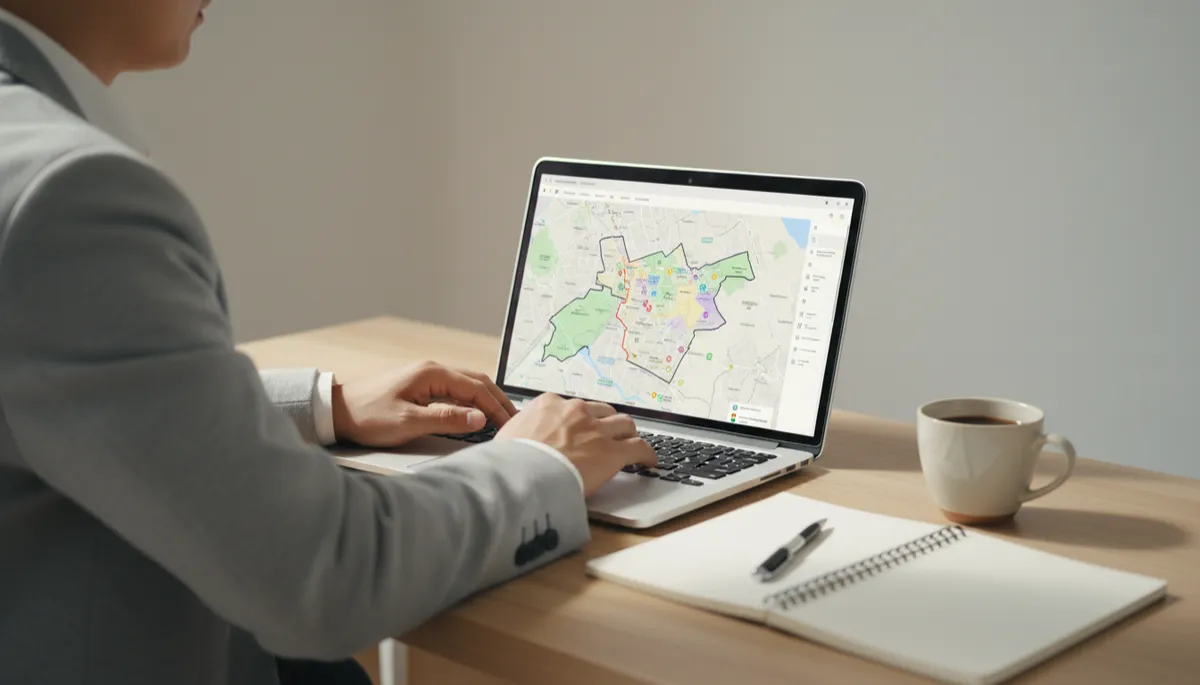
Dedicated location pages help your business appear in multiple local searches across your region.
Avoid copying and pasting the same paragraph onto every location page with only the city name changed. That feels robotic to readers and may be treated as thin or duplicate content by search engines. Instead, keep the structure similar but adjust the details, examples, and local references so each page genuinely serves people in that area.
4. Match Your Website Content with Your Google Business Profile
Your Google Business Profile (formerly Google My Business) is often the first impression potential local customers get when they search for your brand or your service location. For strong Local SEO, the information on your website should closely match what appears on your profile—especially your business name, address, phone number, website URL, and primary category or services.
Consistency builds trust with both Google and your audience. If your homepage says “Connextion Marketing Automation – Atlanta Office” but your Google profile lists only “Connextion” with a different address or phone number, search engines may be uncertain whether they are looking at the same business. That uncertainty can weaken your Search Engine Visibility for local customers.
Review your Google profile and ask:
Does my business name appear the same way on my website and on Google?
Is my address written consistently across all pages, including the footer and contact page?
Are my main services and service locations described in similar language on both?
Aligning these details sends a strong, unified signal about who you are and where you operate. When Connextion helps clients optimize their local presence, this alignment between website content and Google profile is one of the first steps we address because it underpins every other Local SEO effort.
5. Use Plain, Human Language – Not Keyword Stuffing
There is a common misconception that improving Local SEO means repeating phrases like “nearby services,” “local customers,” and “service location” as many times as possible. In reality, keyword stuffing can harm your Search Engine Visibility and turn away real people who find your content awkward or untrustworthy. Search engines have become very good at understanding natural language and context, so you do not need to overload your pages with stiff, repetitive wording.
Instead, focus on clarity and usefulness. Ask yourself: if a potential customer from my city landed on this page, would they quickly understand what we do, where we work, and how we can help them? If the answer is yes, you are on the right track. Mention your city, neighborhood, and surrounding areas where it makes sense, but always in sentences that sound like you are speaking to a person, not to an algorithm.
⚠️ Warning: Phrases like “best local plumber near me in Denver Denver Denver” are red flags for both search engines and customers. Keep it natural and readable.
Bringing It All Together with Automation and Consistency
Improving Local SEO is not a one-time task. It is an ongoing process of refining your message, updating your pages, and staying aligned with how your local customers search for nearby services. This is where a platform like Connextion can support your broader growth strategy. When your website clearly communicates your service location and attracts more local visitors, you need a reliable way to capture those leads, follow up quickly, and convert them into paying clients before they move on to a competitor.
By combining thoughtful Website Optimization with automated lead capture, nurturing, and appointment booking, you create a complete system: local customers find you easily, understand what you offer in their area, and receive timely communication that moves them toward a decision. This alignment between Local SEO and sales automation is what allows businesses to scale without losing the personal, human touch that local customers value.
Next Steps: Turn Local Visibility into Real Growth
To recap, here is a practical checklist you can start implementing today:
Review your homepage and add clear, natural statements that include your main service and service location.
Update your page titles to reflect both what you do and where you do it, in plain language.
Create separate, useful pages for each key city or area you serve, with unique content for each location.
Align your website details with your Google Business Profile so search engines see a consistent story.
Replace keyword stuffing with clear, conversational language that puts your local customers first.
These steps will strengthen your Local SEO foundation and make it easier for people in your community to discover your business when they need nearby services like yours. Once they arrive on your site, the next challenge is turning that attention into appointments, consultations, and sales—consistently and at scale.
That is where Connextion comes in. Our all-in-one, AI-powered sales and communication automation platform helps you capture website leads the moment they arrive, nurture them across email, SMS, and other channels, and book more qualified appointments without adding extra manual work for your team. When your Local SEO is working and your automation is aligned, you build a predictable engine for growth instead of relying on chance.
📌 Key Takeaway: Clear, location-focused content brings the right visitors to your site. Smart automation converts those visitors into loyal, local customers.
If you are ready to connect your improved Search Engine Visibility with a streamlined system for capturing and closing more local customers, Connextion is here to help. Book Your Discovery Call Today to explore how our platform can support your local growth strategy, from website optimization to automated follow-up and beyond.